


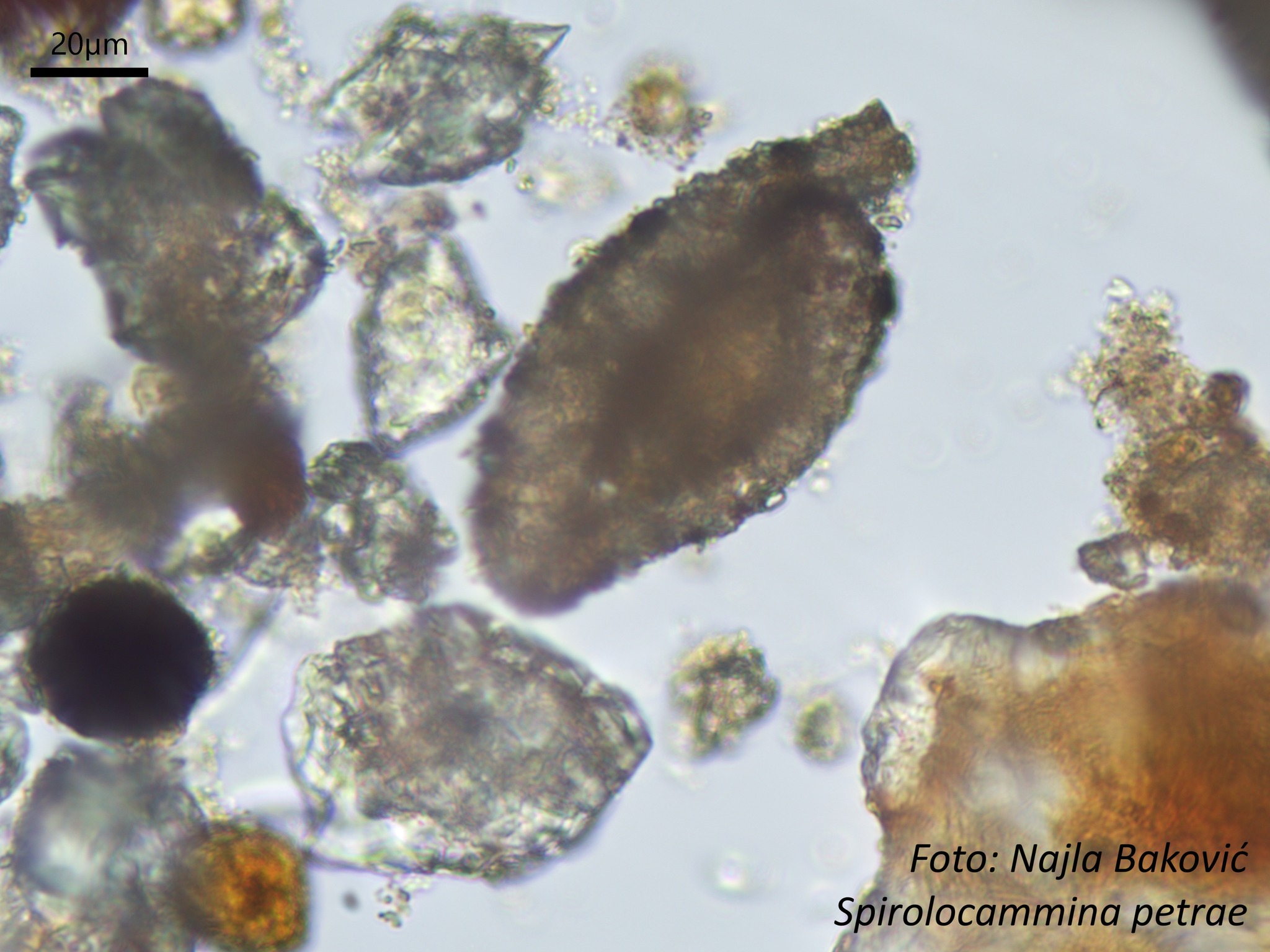
In Miljacka II cave, a species new to science has been described – Spirolocammina petrae, the first freshwater agglutinated tubothalamid foraminifer in the world
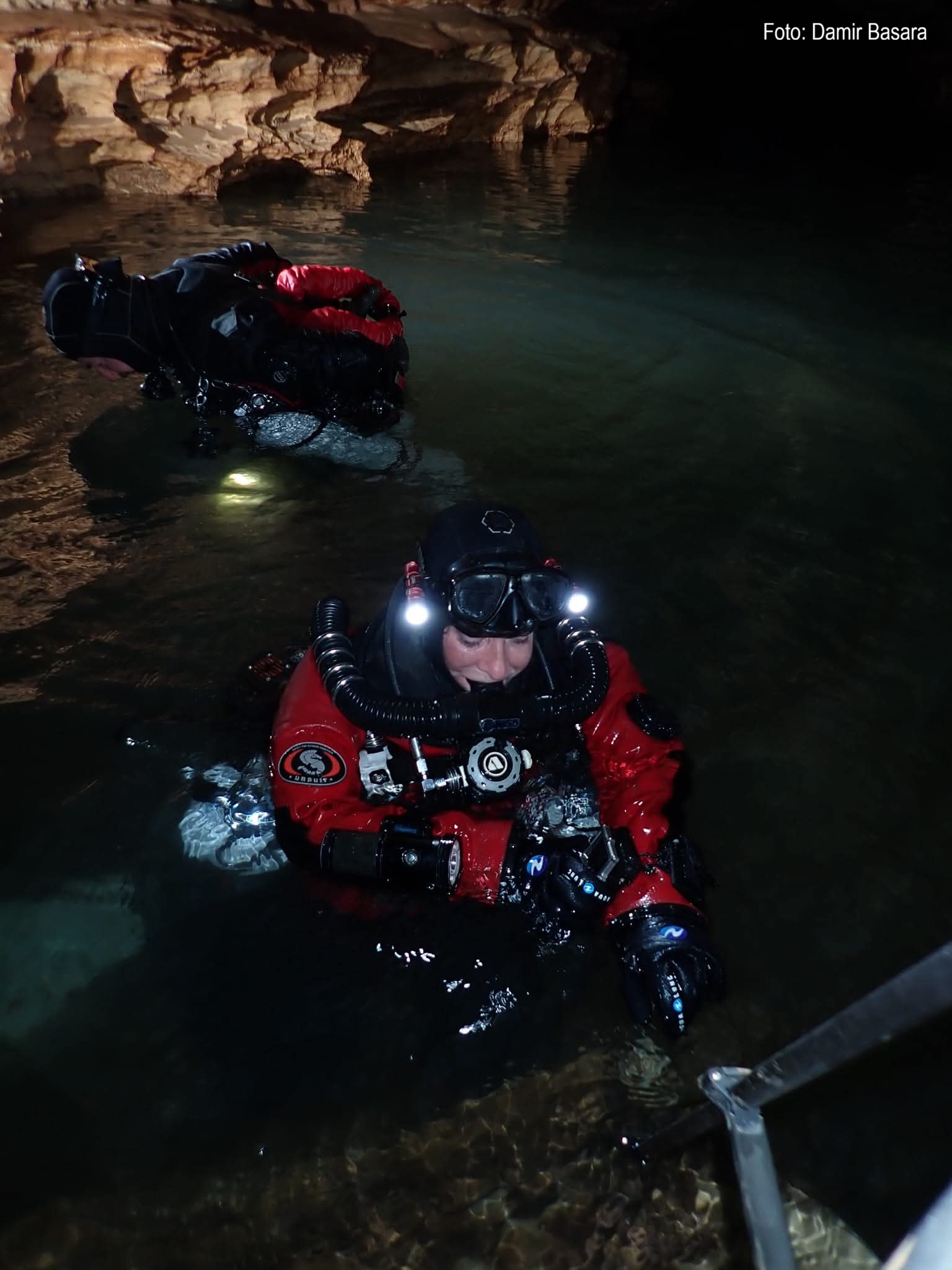
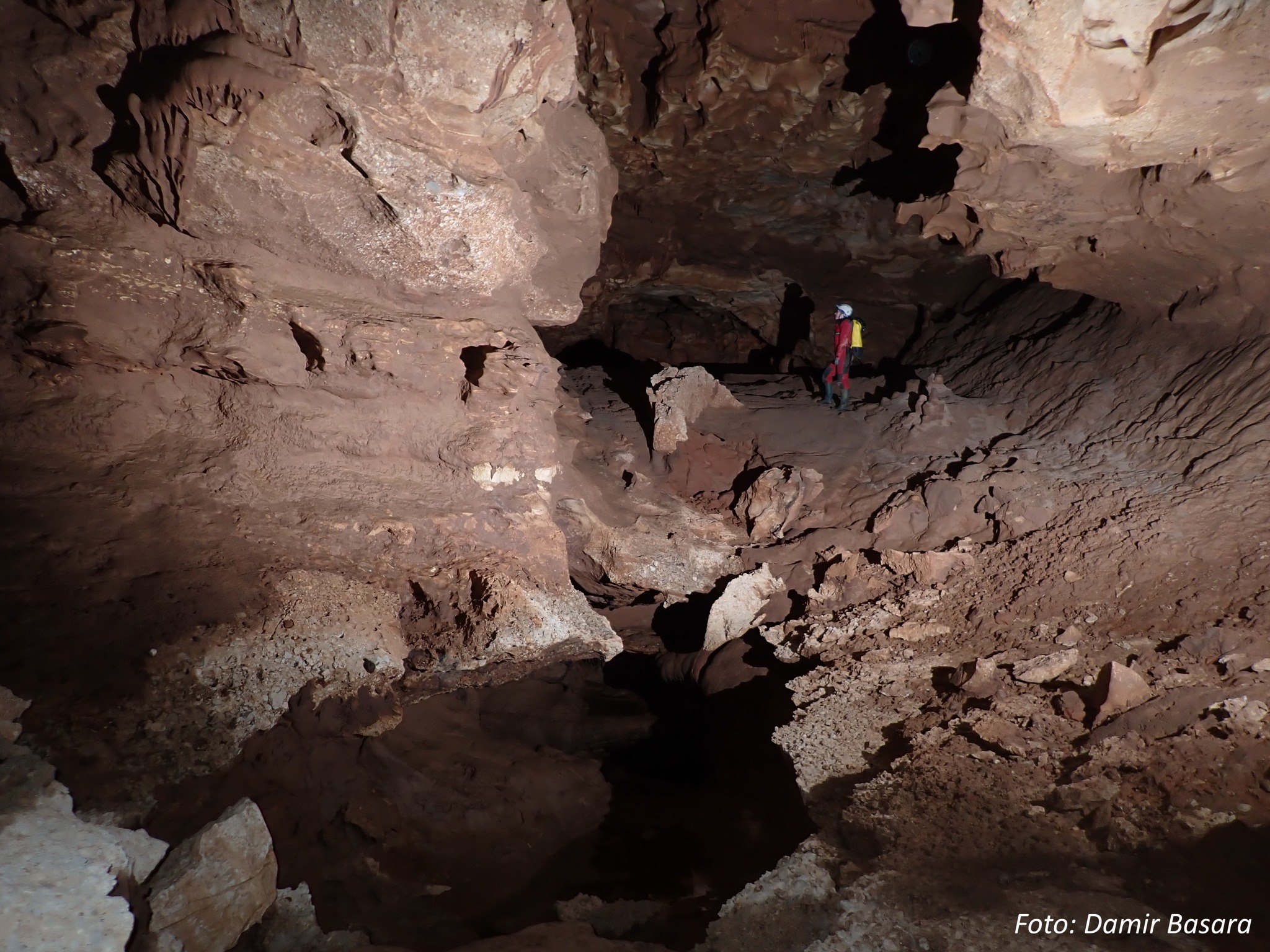
In the scientific journal European Journal of Protistology, a journal has been published describing new species of freshwater foraminifera. The paper entitled “Two new freshwater foraminiferal species (SAR, Rhizaria) from Dinaric karst caves (southeastern Europe)”, is the result of research by a Croatian-Dutch-Swiss team (authors Baković, N., Simensma, F. & Holzmann, M.). The article covers research in the Miljacka II cave, one of the most valuable biospeleological localities in the Park. In this cave, a species new to science has been described – Spirolocammina petrae, the first freshwater agglutinated tubothalamid foraminifer in the world. Miljacka II is the only known locality of this science, making it stenoendemic. It was named in honour of speleodiver Dr. Petra Kovač-Konrad, who participated in the research with other speleologists in exploring and mapping the cave. From the same cave, the foraminifera species Lacogromia MIL has been informally described, and for its formal description, live individuals must be collected. The species from Miljacka II were discovered as part of the project Analysis of dry water periods in the Krka Basin and hydrological elements of ecologically acceptable flows and the effects of extreme drought on ecosystems depending on ground water, financed by the Public Institute of Krka National Park in 2023 and 2024.
Foraminifera are nearly exclusively marine organisms, while the very few freshwater representatives have been very poorly studied. The finding of this species adapted to a freshwater, not to mention underground habitats have made them true evolutionary masters. In the subterranean ecosystems, foraminifera are important regulators of the abundance of other microorganisms. The main feature of the foraminifera is the specific shape of the pseudopods, fake limbs they use to catch prey and for mobility. The pseudopods in foraminifera are called reticulopods, as they look like a large, densely branching network that enables them to be exceptionally successful at capturing bacteria and other microorganisms. In the ecological sense, foraminifera are an important regulator of bacterial populations in ground water, and therefore are excellent cleaners and purifiers of ground water. At the same time, foraminifera are prey for the cave animals. The finding in Krka National Park reminds of just how poorly studied these karst underground habitats are, and of the value of the waters of the Miljacka spring areas, and our responsibility to protect them.
Research
JOŠ NOVOSTI IZ KATEGORIJE
Assessing the status of the Middle Spotted Woodpecker and the European Nightjar in the broader area of the Krka NP
During 2026, the Zidarčac environmental firm conducted investigations into the Middle Spotted Woodpecker (Leiopicus medius) and the European Nightjar (Caprimulgus europaeus) in the broader area of the Krka National Park
The investigation and inventorizing of the entomofauna of forest habitats in the region of the Krka National Park
During 2025 and 2026, the Faculty of Forestry and Wood Technology of the University of Zagreb conducted entomofaunistic research in the most important forest communities in the Krka National Park to gain insight into the representation and condition of the insect fauna in the Park
A topographical map was created of potential speleological sites in the broader area of the Krka National Park
The underground world of karst is one of the most valuable components of the natural heritage of the Krka National Park, but also the most difficult to access
Investigation of the condition and composition of the macrozoobentos of the tufa barriers of the Krka River
During 2024 and 2025, an extensive scientific study of the composition and condition of macrozoobenthos (benthic invertebrates) was conducted on all seven tufa barriers of the Krka River