The intangible cultural heritage is an important part of the identity of the area overseen by the Krka National Park.
Over the centuries, the local population along the Krka River has acquired knowledge and developed skills and crafts, which, together with their beliefs and customs, have shaped their everyday lives and made them remain permanently connected to the natural and cultural landscape in which they reside. The Krka National Park actively works to preserve, protect, and present this valuable heritage through cooperation with the local community, cultural and artistic societies, craftsmen, other institutions, and individuals who cherish the traditions of this region.
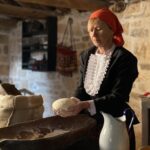
The intangible heritage presented in the Krka National Park includes numerous traditional skills and customs: grinding grain in mills, forging, weaving on a loom, weaving baskets, beating and rinsing cloth, plowing, sowing, winnowing grain, and preparing food in the traditional way. Some activities are presented to visitors primarily at the watermills at Skradinski buk and Roški slap, where the memory of the tradition and way of life along the Krka River has been preserved through authentic depictions of past life.
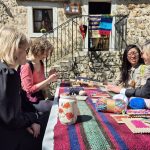
The Krka National Park carries out a number of activities at the local level aimed at preserving and promoting the intangible cultural heritage. These activities include organizing cultural events and festivals, encouraging the work of local artists and craftsmen, implementing educational programs in schools and communities, and collaborating with museums and other cultural institutions.
A special place among the cultural events in the Park is occupied by the Burnum Ides, which is held every year on the grounds of the Roman military amphitheater of Burnum. The name Ides comes from the Roman calendar and denotes the days of the full moon, which the Romans considered more favorable for ceremonies and celebrations. This event brings the history of Roman Burnum to life through a presentation of life and customs from the ancient era. Visitors have the opportunity to learn about ancient Roman crafts and everyday life through designing hairstyles and wearing clothes from that time, the presentation of blacksmithing and pottery crafts, making shoes, participation in ancient games, decorating themselves with a laurel wreath, and tasting dishes prepared according to ancient recipes. The Burnum Ides contribute to the preservation of cultural memory and raise public awareness of the value of the ancient heritage once present, and still partially preserved, at that site.
In cooperation with local cultural and artistic societies and the local community, the event Krka Fest – The Cultural Summer in the Krka National Park is also organized, which further enriches the cultural offerings of the Park and promotes the traditions, customs, and identity of the local population through music, dance, folklore, and traditional crafts.
Contributing in this manner to the preservation and promotion of traditional crafts, the Krka National Park has produced a series of short documentary films under the common title When I Think of the Krka. The films tell stories about people and traditional occupations that have marked life along the Krka River. Films have been made about a miller, a blacksmith, and a weaver, as well as about the traditional preparation of bread, and are available on the official YouTube channel of the Krka National Park.
By preserving the intangible cultural heritage, the Krka National Park is not only concerned with preserving the memory of the past, but also with passing on customs and valuable knowledge and skills cultivated over the centuries to future generations, thus contributing to the preservation of the cultural identity and authenticity of the area along the Krka River.