


Research of Eastern Sub-Mediterranean dry grasslands of the order Scorzoneretalia villosae Kovačević 1959 (NATURA 2000 code 62A0) in Krka NP
Grasslands of the order Scorzoneretalia villosae (NATURA 2000, code 62A0) are a threatened habitat type and their conservation is of both national and European significance
These are habitats of exceptional biodiversity, with numerous taxa of orchids, endemic species, threatened and strictly protected species. They are also the reason why Krka National Park was designated and Important Plant Area (IPA).
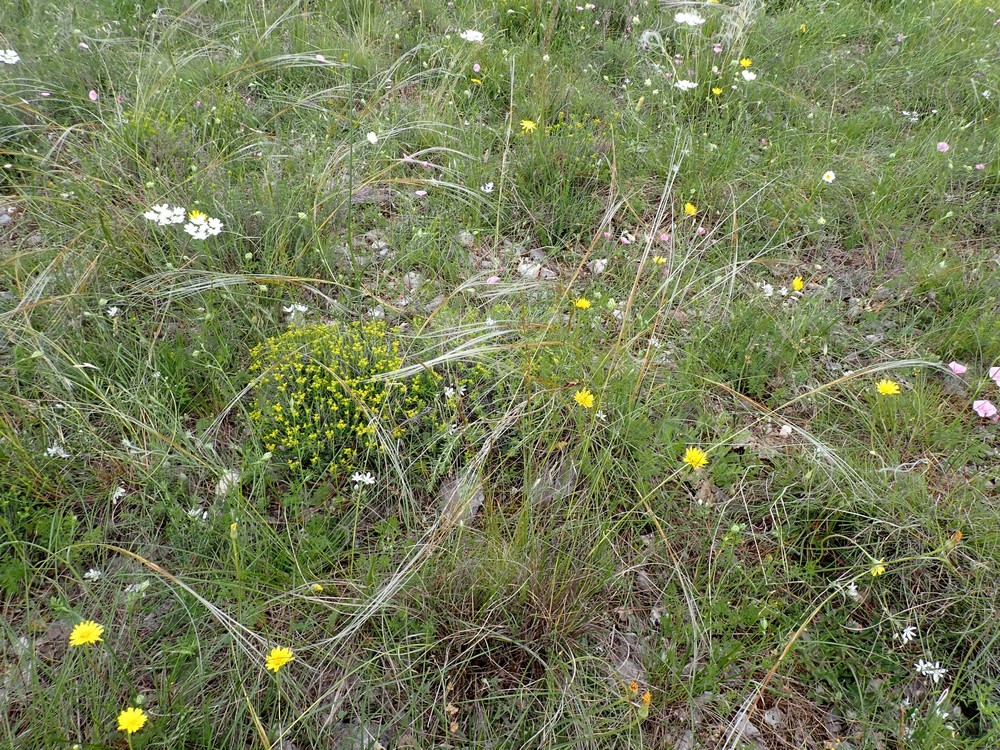
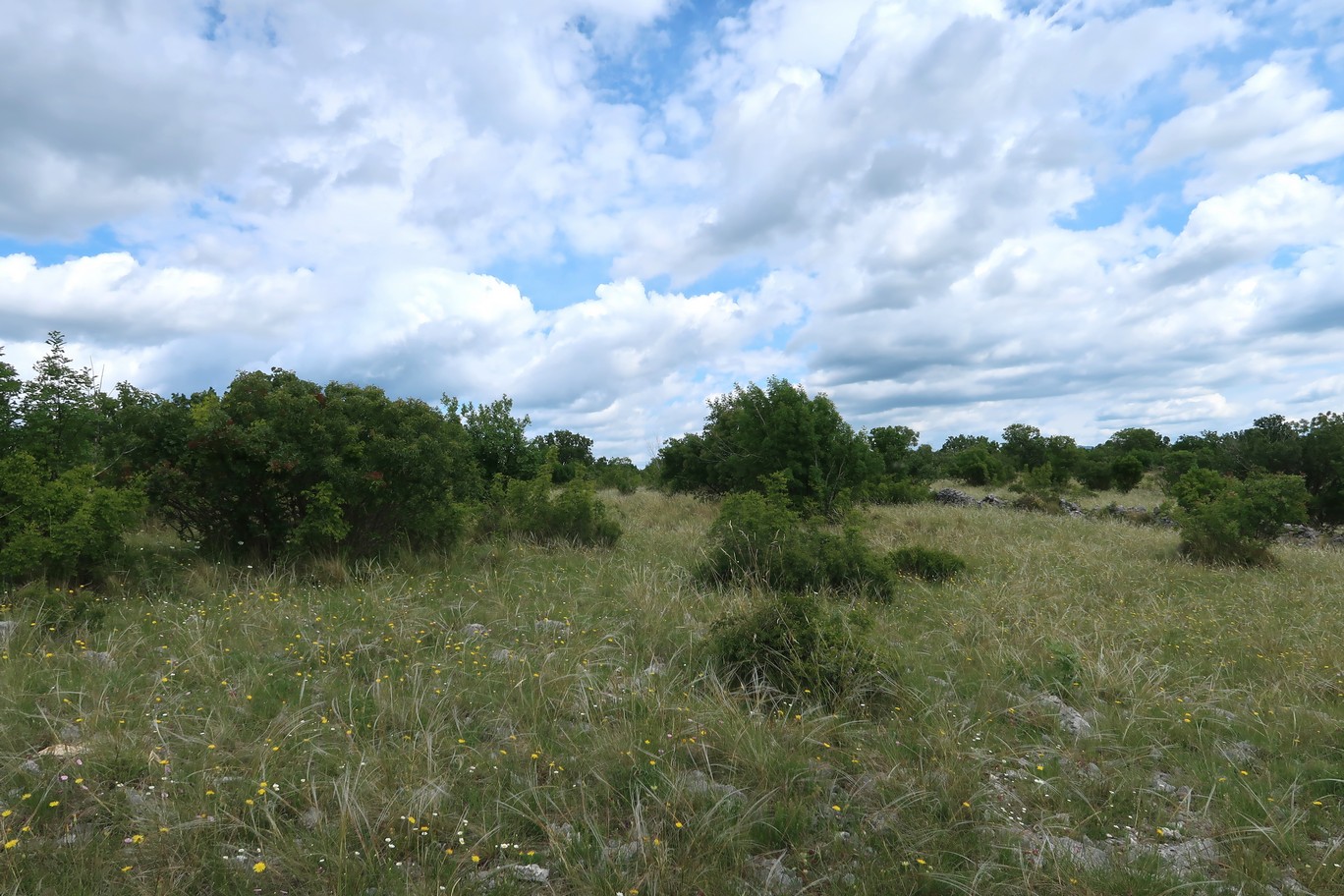
The Public Institute of Krka National Park conducted research on these grasslands over two vegetation seasons (2024 and 2025). A total of 140 phytocenological relevés were collected, and a total of 333 taxa recorded. An analysis of the relevés shows that the majority of the dry grassland surface in the park is dominated by grasslands of the association Chrysopogono grylli-Koelerion splendentis Horvatić 1973, with communities of rocky grasslands of Festuco-Koelerietum splendentis and grasslands of the association Bromo erecti-Chrysopogonetum grylli Horvatić 1934. This association also includes stands with sage that is intermittently found in the southern part of the Park.
The association Scorzonerion villosae Horvatić ex Kovačević 1959, including the sub-Mediterranean dry grasslands in deep soil, has been recorded alongside grasslands of the association Dichanthio ischaemum-Cleistogenetum serotinae Trinajstić ex Poldini 1975, which are found sporadically in the Park and cover only a small area, while heterogenous pioneer communities cover a larger area and are dominated by marvel grass (Dichanthium ischaemum (L.) Roberty). Significant areas in the Park (particularly around Konjevrate, in Ivoševci, and around Burnum) are covered by grassland vegetation dominated by the grass species Dasypyrum villosum (L.) P.Candargy, which has not been studied in detail in Croatia.
The flora of the dry grasslands of Krka National Park is composed of 333 taxa, and in terms of life forms, the therophytes (35.74%) and hemicryptophytes (34.23%) are most prevalent. The flora includes 28 endemic species (7.32%), seven threatened species (two listed as endangered (EN) and five as vulnerable (VU)) and 40 strictly protected species at the national level. Some 20 taxa of orchids (Orchidaceae) have also been recorded).
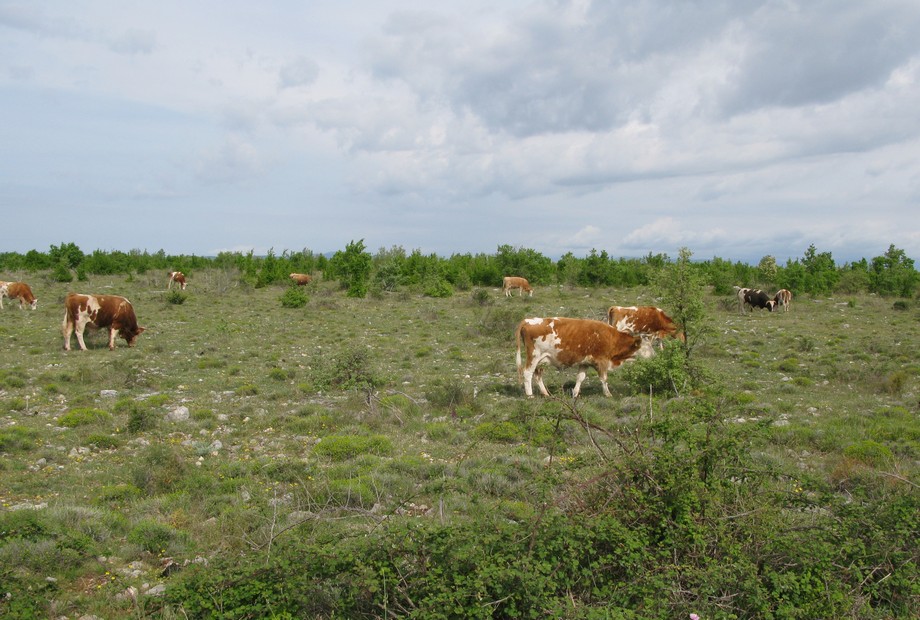
The research conducted shows that the state of the dry grasslands in Krka National Park is concerning, as the grassland surfaces are continuously diminishing. Due to the reduction or absence of grazing and mowing, these grasslands grow into thickets (juniper stands) and low and open thickets of common oak and hornbeam. In the southern parts of the Park, large areas that were once dry grasslands have today become overgrown and developed into Aleppo pine stands, which spontaneously spread, particularly after fire events. The most significant large grassland areas have been recorded in the area around Lozovac (alongside Punčka draga), between Ključ and Nos Kalik by the Čikola Canyon, in the broader area of Bogatić, and in the northern part of the Park in the area between Zelići and Marjanovića torovi (Ljubač).
With the aim of preserving these grasslands, the Public Institute of Krka National Park has become a partner in the five-year project Mosaic of LIFE. Through the project, woody vegetation, particularly juniper (Juniperus sp.) will be removed from grassland areas, livestock grazing will be encouraged, and public awareness raised as to the importance of preserving these exceptionally valuable habitats.
Research
JOŠ NOVOSTI IZ KATEGORIJE
Assessing the status of the Middle Spotted Woodpecker and the European Nightjar in the broader area of the Krka NP
During 2026, the Zidarčac environmental firm conducted investigations into the Middle Spotted Woodpecker (Leiopicus medius) and the European Nightjar (Caprimulgus europaeus) in the broader area of the Krka National Park
The investigation and inventorizing of the entomofauna of forest habitats in the region of the Krka National Park
During 2025 and 2026, the Faculty of Forestry and Wood Technology of the University of Zagreb conducted entomofaunistic research in the most important forest communities in the Krka National Park to gain insight into the representation and condition of the insect fauna in the Park
A topographical map was created of potential speleological sites in the broader area of the Krka National Park
The underground world of karst is one of the most valuable components of the natural heritage of the Krka National Park, but also the most difficult to access
Investigation of the condition and composition of the macrozoobentos of the tufa barriers of the Krka River
During 2024 and 2025, an extensive scientific study of the composition and condition of macrozoobenthos (benthic invertebrates) was conducted on all seven tufa barriers of the Krka River