


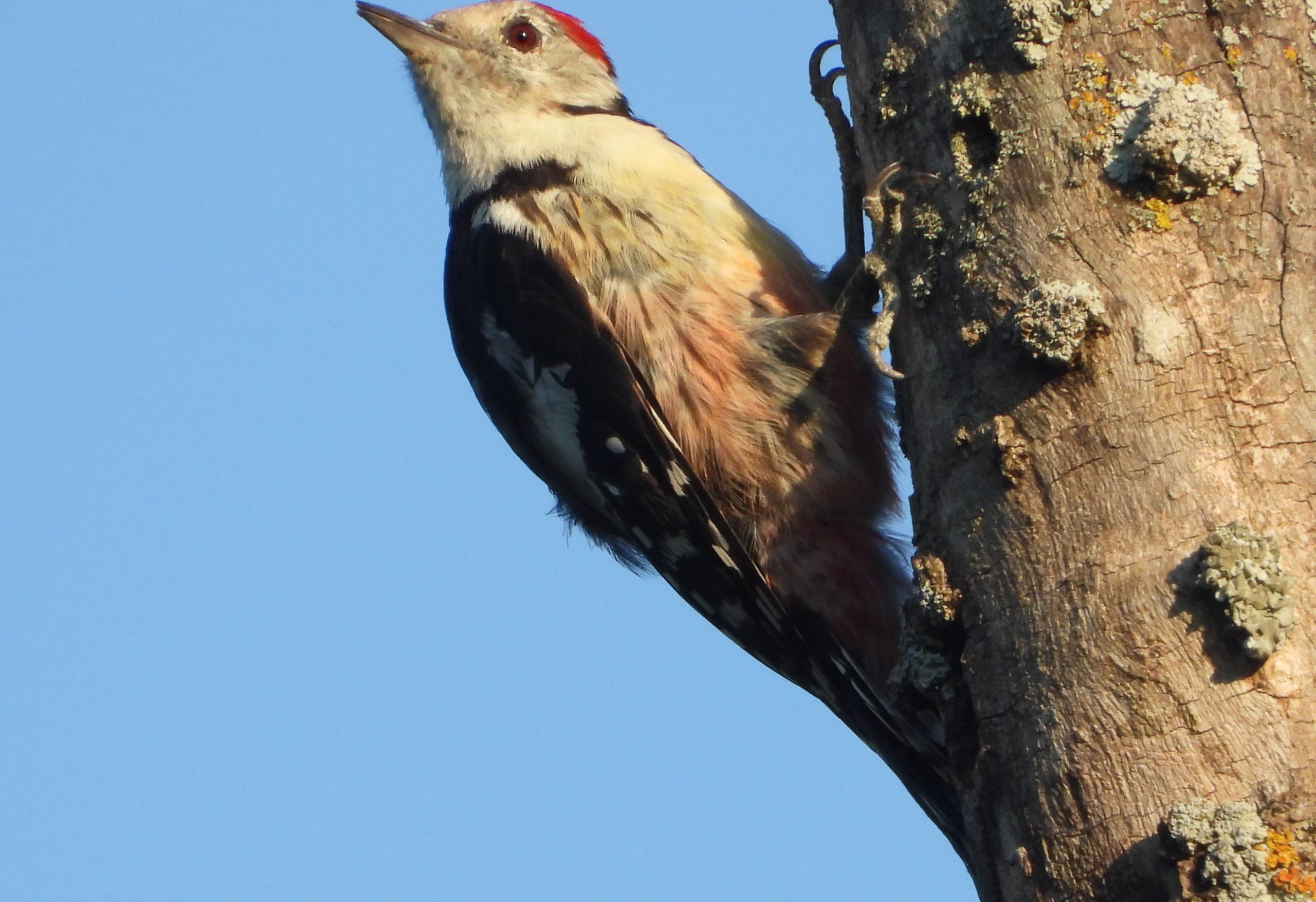
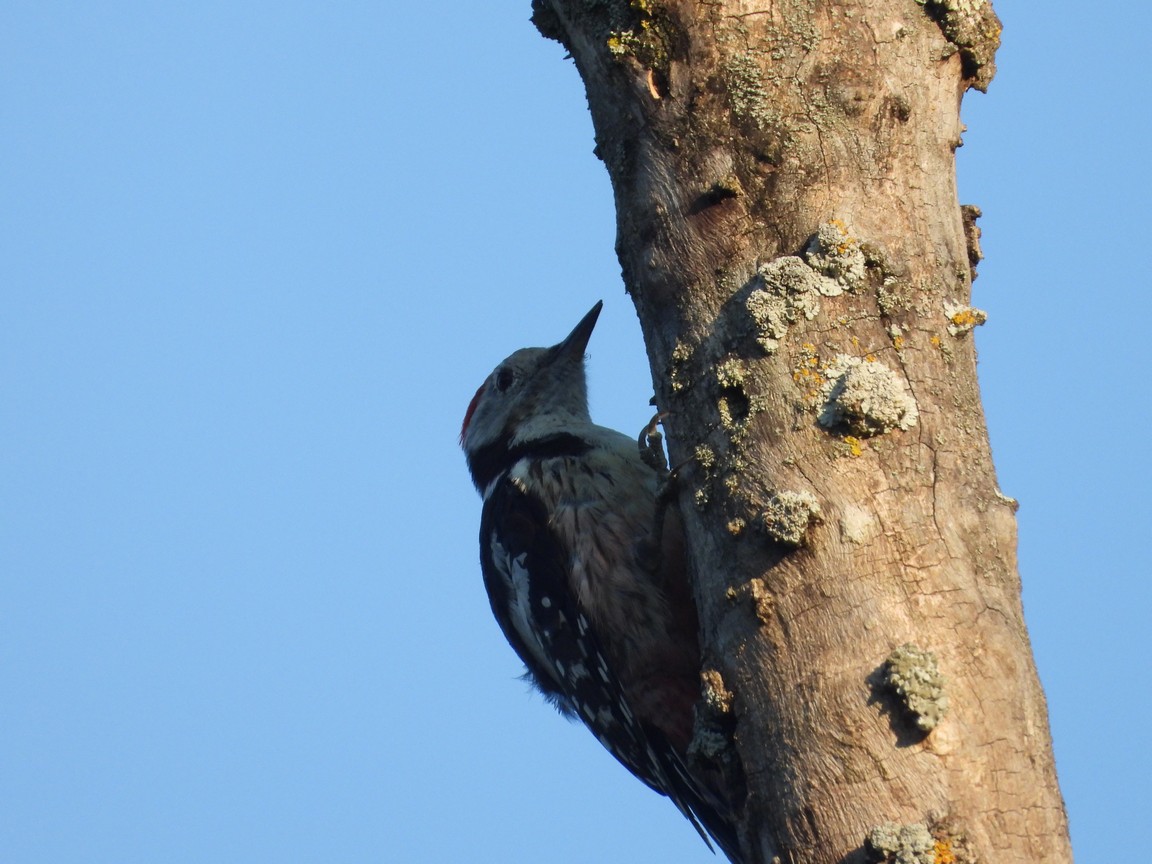
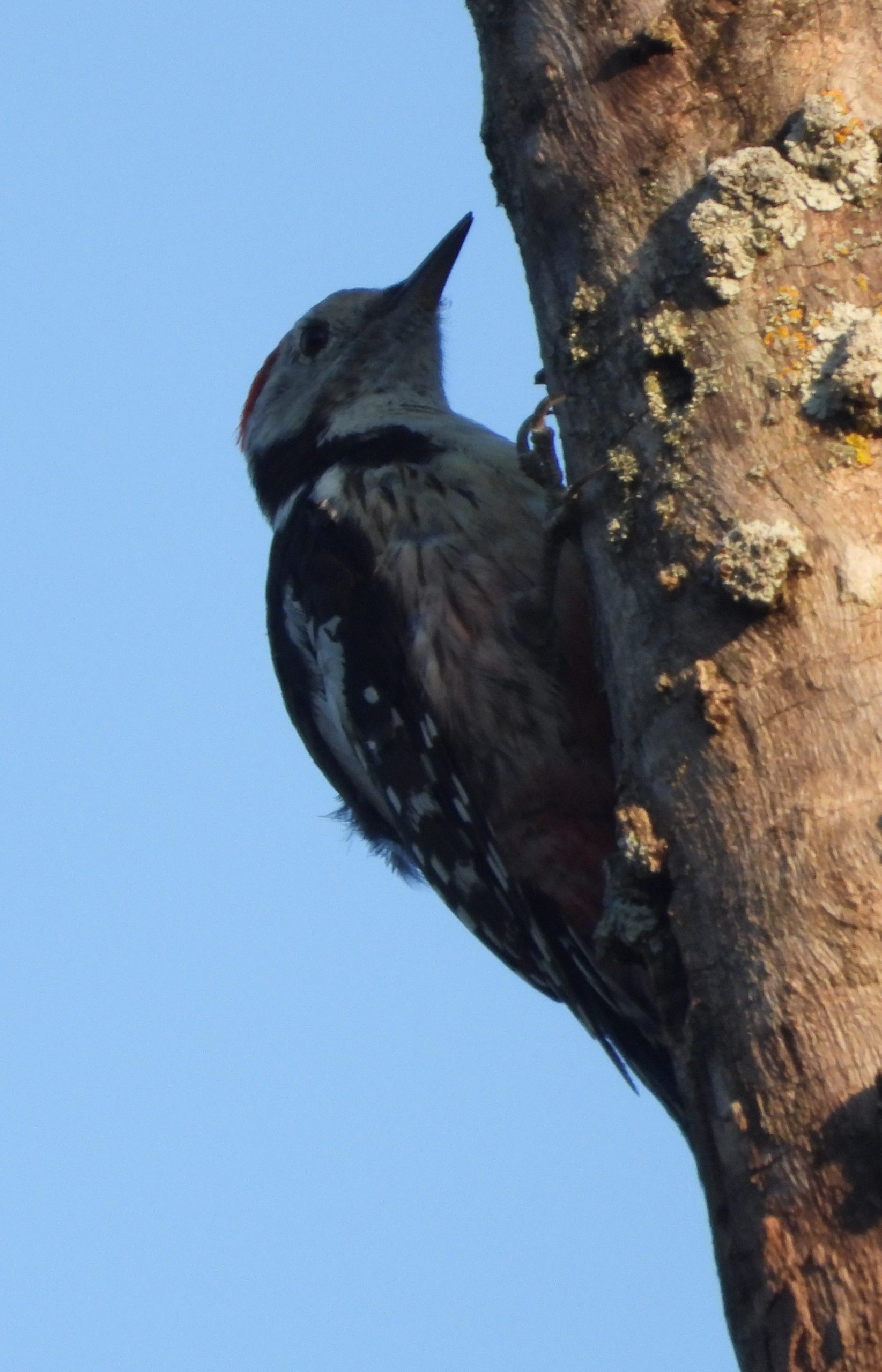
During 2026, the Zidarčac environmental firm conducted investigations into the Middle Spotted Woodpecker (Leiopicus medius) and the European Nightjar (Caprimulgus europaeus) in the broader area of the Krka National Park.
The aim of the research was to determine their presence and distribution, estimate their number, and collect data important for their long-term monitoring and the conservation of their habitats.
The Middle Spotted Woodpecker was confirmed in the area near the Krka monastery, where it had also been recorded during previous surveys. This repeated finding at the same site confirms its importance for this species. A report was also received about a sighting of a Middle Spotted Woodpecker near the Roški slap waterfall; however, the presence of the species in that area could not be confirmed during the survey. The Syrian woodpecker was not recorded at any of the other surveyed sites, although other woodpecker species—the Great Spotted Woodpecker, the Lesser Spotted Woodpecker, and the Black Woodpecker—were observed.
The European Nightjar was surveyed along three transects comprising a total of 18 points. A maximum of 24 territorial males were recorded during two survey visits. Based on the data obtained, the relative density was estimated at approximately 1.7 nightjars/km². Extrapolating this to the broader area of suitable habitats yielded a rough estimate of 209 territorial males, or potential breeding pairs.
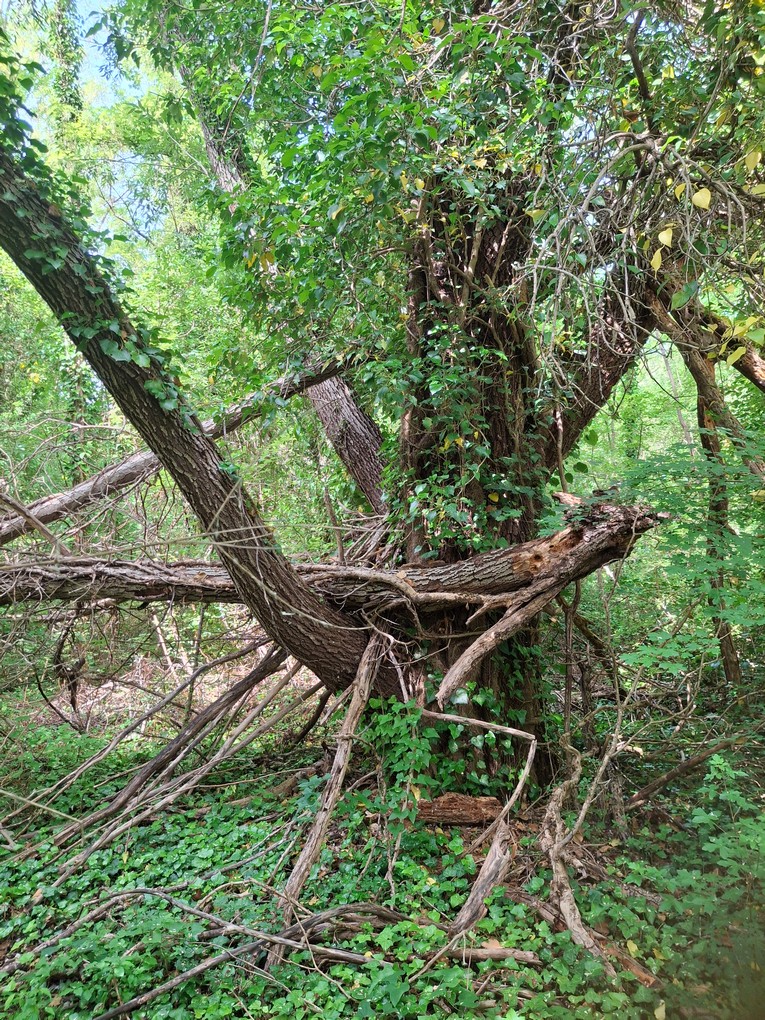
The results indicate that the broader area of the Krka National Park remains an important area for habitats of both species, while also highlighting the need for continued systematic monitoring. Particular attention should be paid to the conservation of older forest stands, such as are suitable for the middle spotted woodpecker, and the maintenance of a mosaic of the open and semi-open habitats that are important for the European nightjar. Long-term monitoring, conducted using a consistent methodology, will facilitate a better understanding of year-to-year variations, and the identification of long-term population trends.
The investigation was conducted according to contemporary professional and scientific methods, employing a methodology used in previous studies of the area, which permitted the comparison of the obtained results with data collected previously.
Research
JOŠ NOVOSTI IZ KATEGORIJE
The investigation and inventorizing of the entomofauna of forest habitats in the region of the Krka National Park
During 2025 and 2026, the Faculty of Forestry and Wood Technology of the University of Zagreb conducted entomofaunistic research in the most important forest communities in the Krka National Park to gain insight into the representation and condition of the insect fauna in the Park
A topographical map was created of potential speleological sites in the broader area of the Krka National Park
The underground world of karst is one of the most valuable components of the natural heritage of the Krka National Park, but also the most difficult to access
Investigation of the condition and composition of the macrozoobentos of the tufa barriers of the Krka River
During 2024 and 2025, an extensive scientific study of the composition and condition of macrozoobenthos (benthic invertebrates) was conducted on all seven tufa barriers of the Krka River
Monitoring the status of the target fish species Canostrini's Goby (Pomatoschistus canestrinii) and the Dalmatian barbelgudgeon (Aulopyge huegelii)
Monitoring the status of the target fish species Canostrini's Goby (Pomatoschistus canestrinii) and the Dalmatian barbelgudgeon (Aulopyge huegelii)