


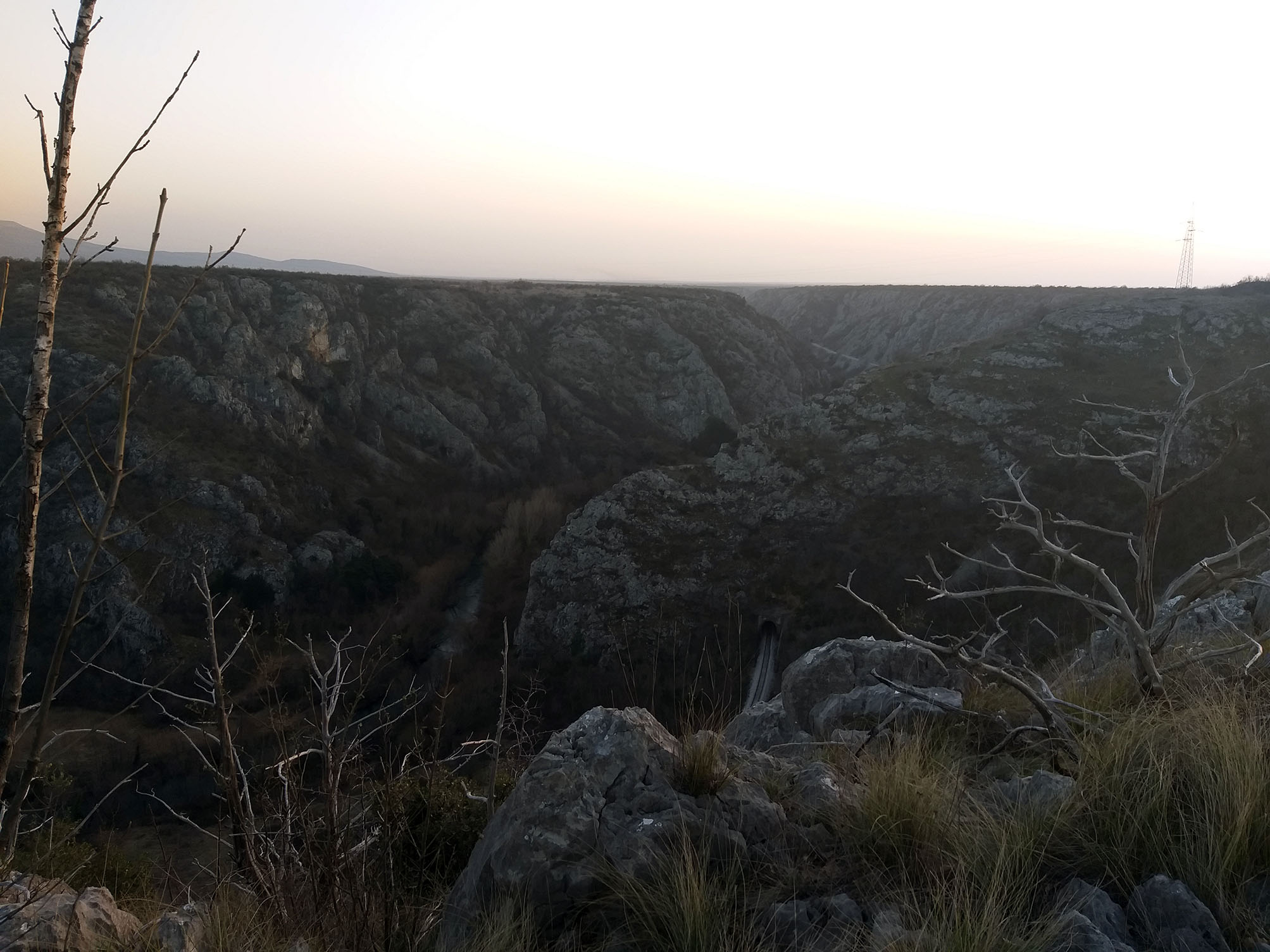
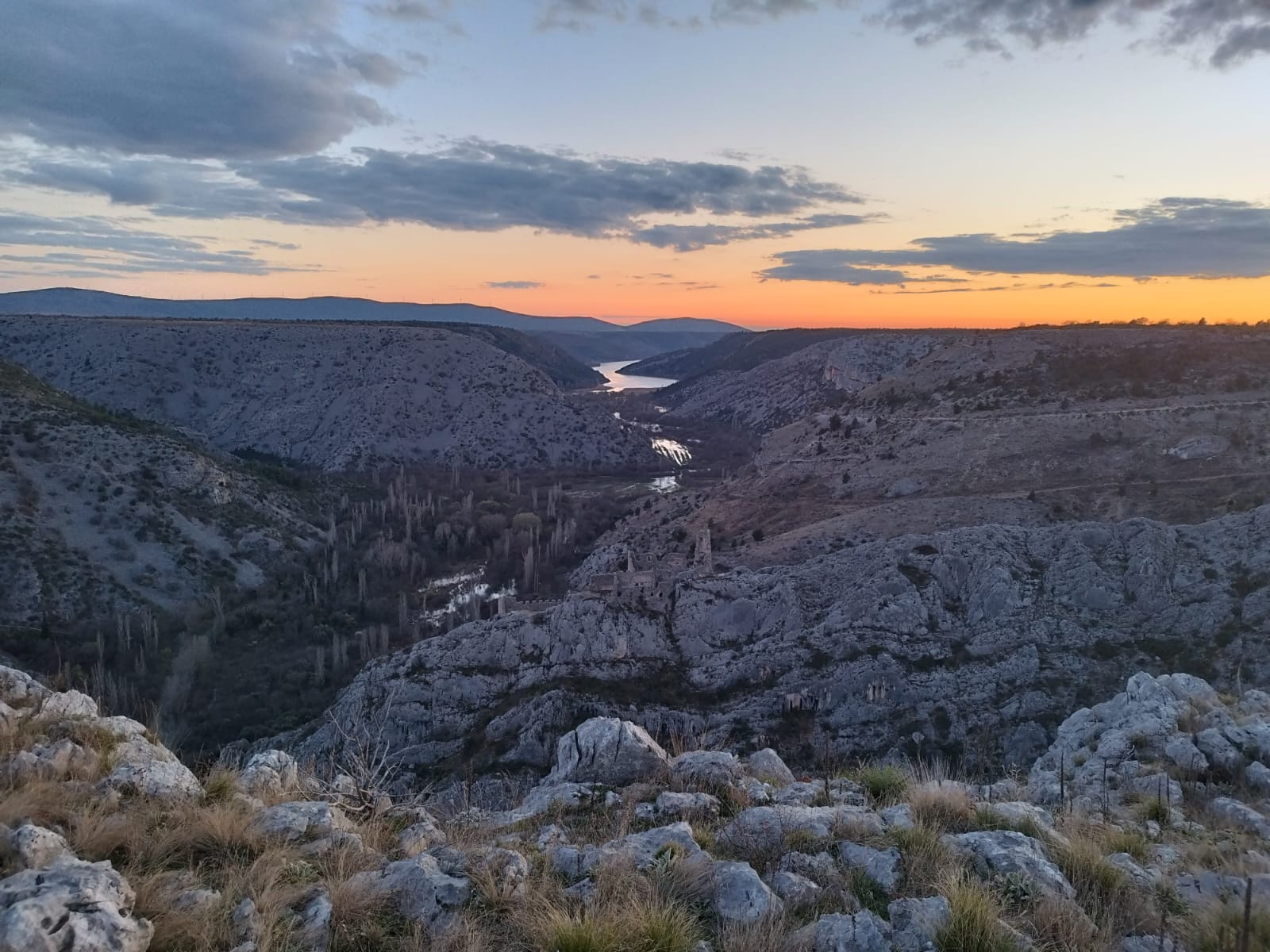
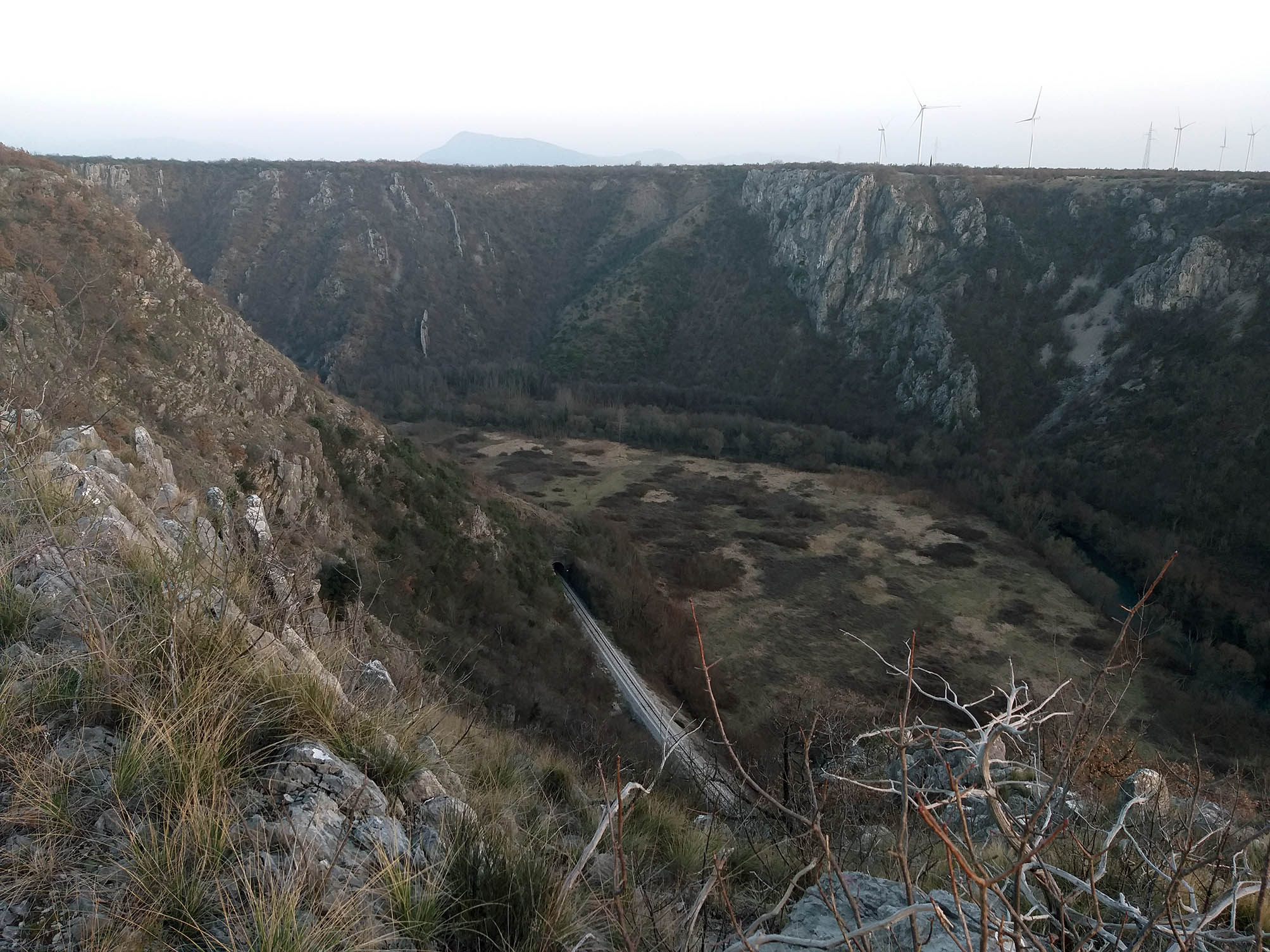
From February 8 to March 14, 2026, during thirty-one field trips, the nature guards of the Krka National Park listened to the singing of male eagle owls in the evening hours, during sunset, at twenty-one locations along the canyons of the Krka and Čikola Rivers.
The song of the males was heard during nineteen field trips, at locations within the range of the Eurasian Eagle Owl. Taking into account the direction from which the calls came, it was estimated that eight pairs have their habitat in the Park area.
The monitoring results show the common presence of the Eurasian Eagle Owl in the lower, middle, and upper reaches of the Krka River, and, as in previous years, have confirmed the stability of the eagle owl population in the Park. The presence of the eagle owl, a predator at the top of the food chain, in a habitat speaks of its quality.
The Eurasian eagle-owl is a strictly protected species and a target species of the ecological network area HR1000026 Krka and the surrounding plateau, so a breeding population of the Eurasian eagle-owl of at least sixty pairs with habitats suitable for its nesting and feeding should be preserved in the Krka National Park area.
By monitoring nesting pairs of eagle owls in the Park area, the Krka National Park is joining a national monitoring program aimed at monitoring trends in the eagle owl population in Croatia and its distribution, and also identifying threats and causes of its endangerment. The collected data will enable better planning and implementation of protection measures for the conservation of this strictly protected species.
The breeding population of the Eurasian eagle owl in Croatia falls into the category of Near Threatened (NT), which means that it is not currently threatened with extinction.

Monitoring
JOŠ NOVOSTI IZ KATEGORIJE
Monitoring the state of cave fauna at speleological structures in the broader area of the Krka NP
During 2025, the Croatian Biospeleological Society, in cooperation with the Krka National Park, conducted monitoring of the condition of cave fauna and speleological structures in the Park area
Monitoring the status of hibernating bat colonies in the broader area of Krka National Park in 2026
In January 2026, the company Geonatura d.o.o. conducted monitoring of hibernating bat colonies in the broader area of the Krka National Park, which included an inspection of the underground shelters of Topla Pećina Cave, Miljacka II Cave, Velika Pećina Kaočinka Cave and Stara Jametina Cave
Monitoring the occurrence of plant diseases and pests in forest communities of the Krka NP
The project "Monitoring the occurrence of plant diseases and pests in forest communities of the Krka National Park – 2024 and 2025" was implemented with the aim of systematically monitoring the health of the Park's forest ecosystems in conditions of pronounced climate change, frequent dry periods, forest fires, and an increased risk of the appearance and spread of harmful and invasive organisms
Winter Counting of Waterfowl in the area of the Krka National Park in 2026
This year we also counted waterfowl in the Krka National Park area