


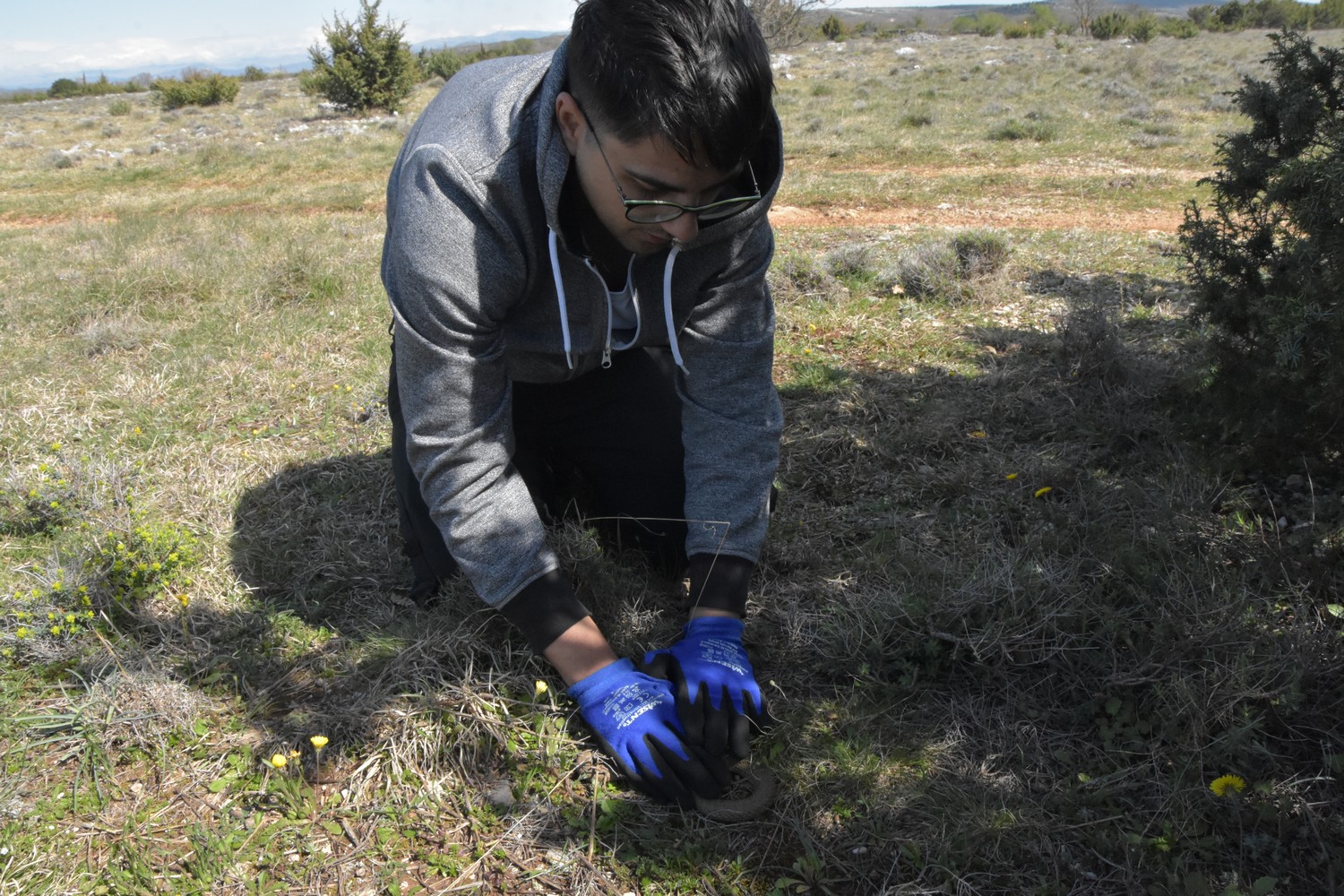
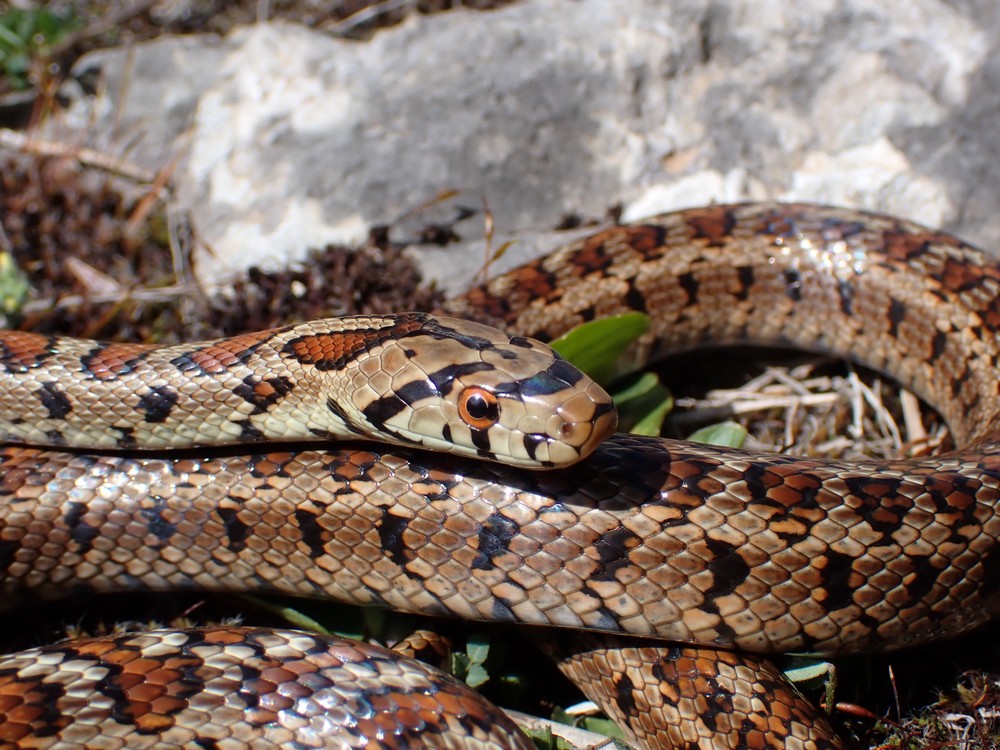
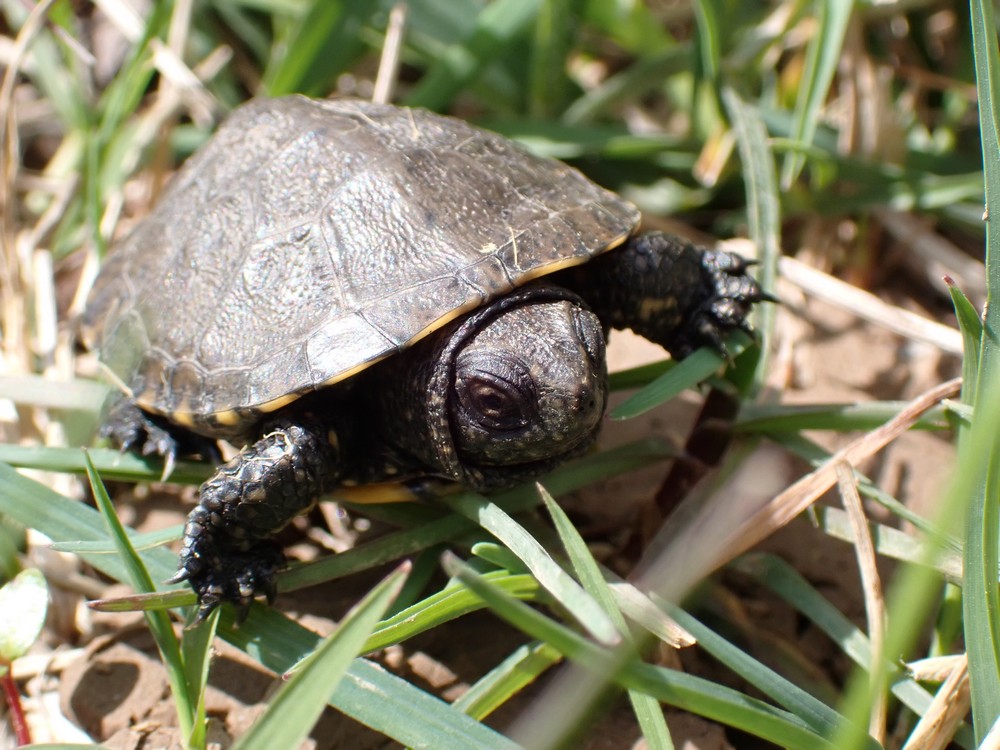
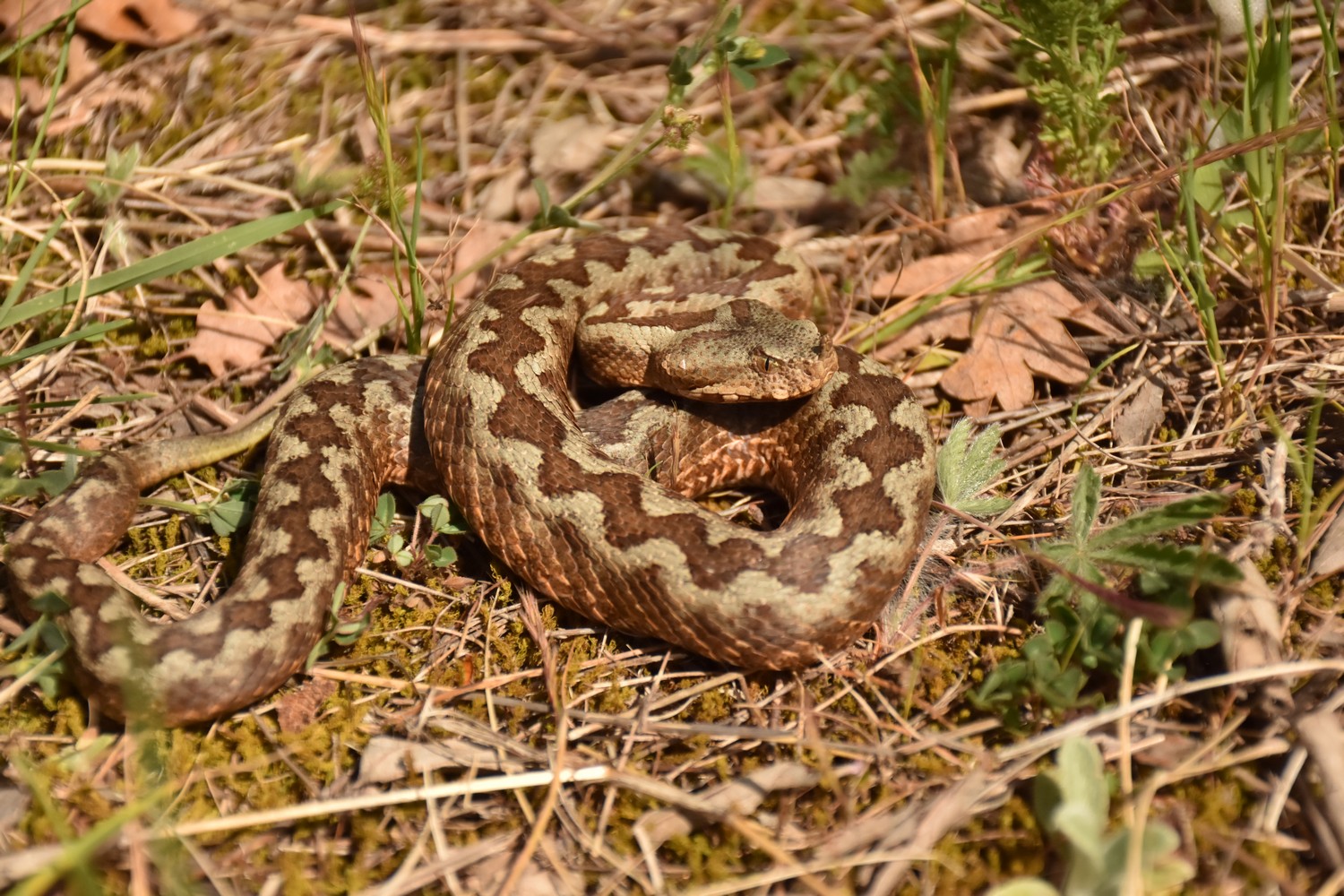
During 2025, in the period from April to September, research and monitoring of the conservation status of three target reptile species were carried out: the European pond turtle (Emys orbicularis), the Hermann tortoise (Testudo hermanni) and the European rat snake (Zamenis situla) in the area of the ecological network HR2000918 or the wider area of the Krka NPEmys orbicularis), kopnene kornjače (Testudo hermanni) i crvenkrpice (Zamenis situla)
S ciljem utvrđivanja rasprostranjenosti vrsta, istraživanja su obuhvatila sedam kvadranata dimenzija 10 km × 10 km koji pokrivaju područje Nacionalnog parka Krka i ekološke mreže, dok je fokus istraživanja populacija bio usmjeren na kvadrante dimenzija 1 km × 1 km s pogodnim staništima.
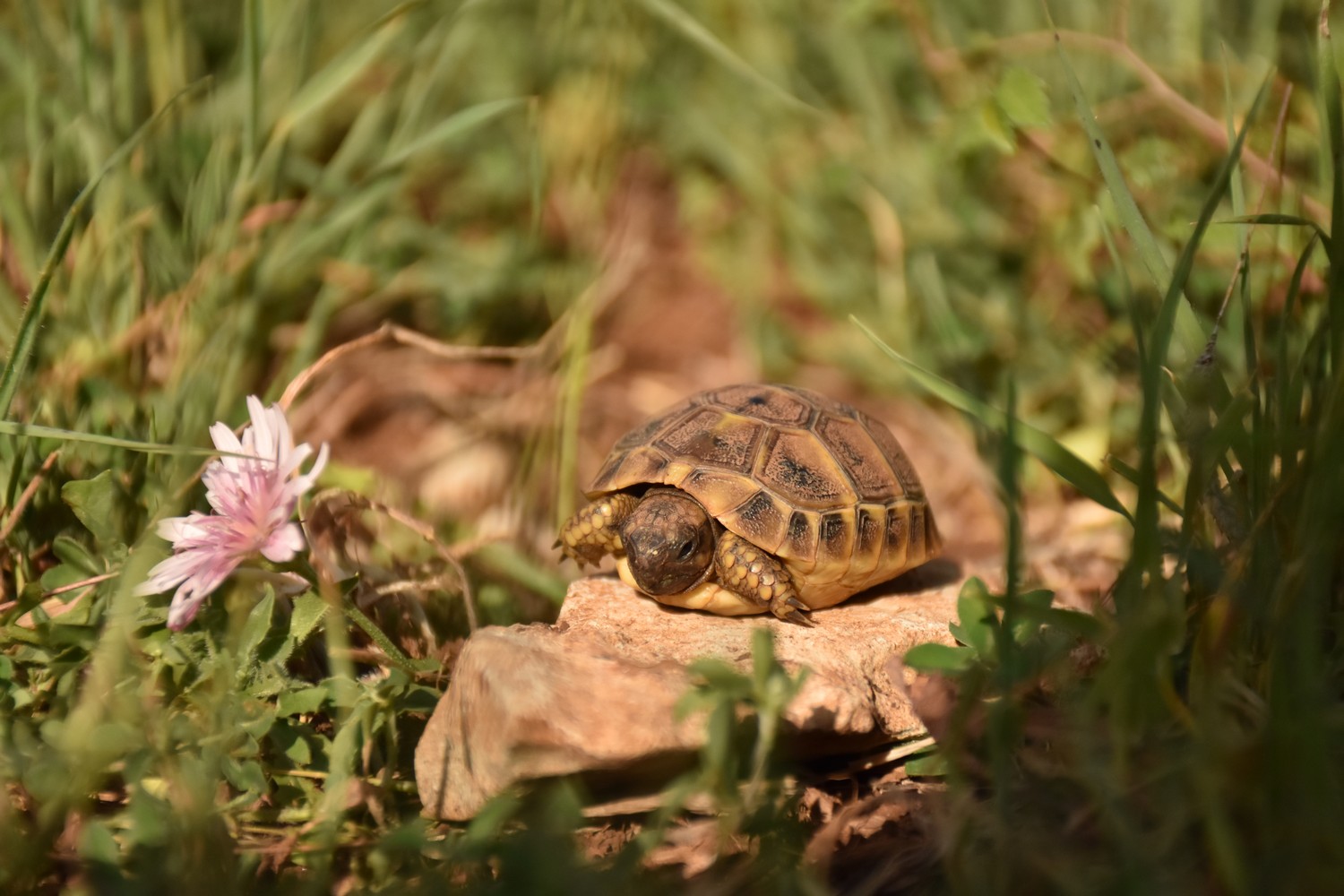
A total of 137 individuals of the target species were recorded. The most numerous were the pond turtles with 106 recorded individuals and their presence were confirmed in 23 1×1 km quadrants, of which 17 were new quadrants, where the species had not been recorded before. As for the terrestial turtle, 26 individuals were recorded and its presence was confirmed in 15 1×1 km quadrants, of which 12 were new.
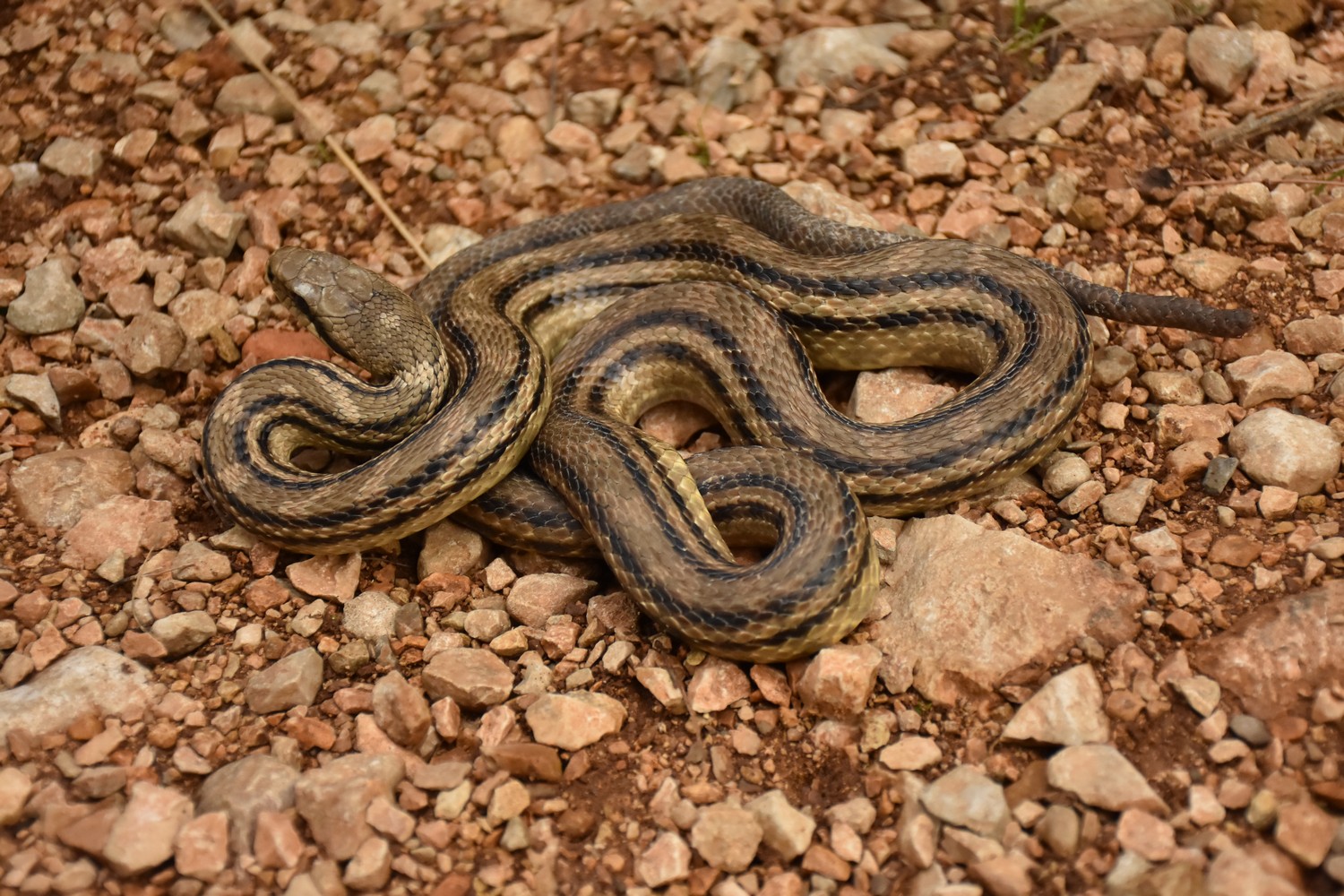
Five individuals of the European rat snake were recorded, with their presence confirmed in five new 1×1 km quadrants. In addition to the three target species, an additional 19 species of amphibians and reptiles were recorded through 490 findings. Of particular note were finds of the strictly protected four-lined snake (Elaphe quatuorlineata) and the rarely seen fire salamander (Salamandra salamandra).
The analysis of habitat parameters determined that the habitats in the studied area were predominantly of good quality for the terrestial tortoise and the rat snake, and of medium quality for the pond turtle. The pond turtle habitats are of medium quality due to natural conditions, which means that these turtles only use certain suitable parts of the bodies of water. The main threats recorded include natural succession (overgrowth of habitat), road casualties, the presence of invasive alien species, and the impact of climate change (drought). Based on the results, conservation measures have been proposed, which include maintenance of grasslands and bodies of water, control of invasive species, and recommendations for further monitoring and management of the populations of these three target species. Also, targeted research is proposed for other species (such as the sharp-snouted rock lizard and the newt) that we believe should be implemented as soon as possible.
Monitoring
JOŠ NOVOSTI IZ KATEGORIJE
Monitoring the state of cave fauna at speleological structures in the broader area of the Krka NP
During 2025, the Croatian Biospeleological Society, in cooperation with the Krka National Park, conducted monitoring of the condition of cave fauna and speleological structures in the Park area
Monitoring of nesting pairs of the Eurasian Eagle Owl (Bubo bubo) in the Krka NP area in 2026
From February 8 to March 14, 2026, during thirty-one field trips, the nature guards of the Krka National Park listened to the singing of male eagle owls in the evening hours, during sunset, at twenty-one locations along the canyons of the Krka and Čikola Rivers
Monitoring the status of hibernating bat colonies in the broader area of Krka National Park in 2026
In January 2026, the company Geonatura d.o.o. conducted monitoring of hibernating bat colonies in the broader area of the Krka National Park, which included an inspection of the underground shelters of Topla Pećina Cave, Miljacka II Cave, Velika Pećina Kaočinka Cave and Stara Jametina Cave
Monitoring the occurrence of plant diseases and pests in forest communities of the Krka NP
The project "Monitoring the occurrence of plant diseases and pests in forest communities of the Krka National Park – 2024 and 2025" was implemented with the aim of systematically monitoring the health of the Park's forest ecosystems in conditions of pronounced climate change, frequent dry periods, forest fires, and an increased risk of the appearance and spread of harmful and invasive organisms